.png)


Last Updated on February 06, 2026
Last Updated on February 06, 2026





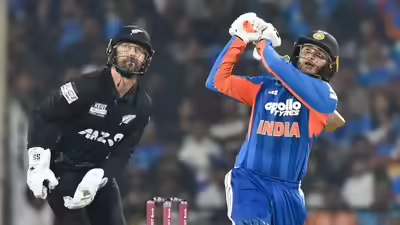
The T20 World Cup returns to Indian soil after a decade. The format that once felt like a rebellious upstart has matured into a ruthless, high-octane beast which has shed its skin multiple times. TOI brings you the defining shifts that have rewritten the format’s DNA.....
DEATH OF THE ANCHOR BATTER
Gone are the days when a steady accumulator could shepherd the innings. Post-2016, the anchor role is now seen as a luxury no team can afford. Strike rates in the middle overs have skyrocketed. Today’s game demands constant boundary-hunting.
RESURGENCE OF WRIST SPIN
In 2016, India entered the T20 World Cup without a frontline wrist spinner, relying instead on orthodox finger spin. The format punished that conservatism and wrist spin exploded thereafter. Rashid Khan, Adam Zampa, Adil Rashid and later Kuldeep Yadav, Varun Chakravarthy, Wanindu Hasaranga and Noor Ahmad turned matches with googlies, flippers and variations.
RISE OF MULTI-SKILLED CRICKETERS
The 2026 squads are built around players who can give you at least two disciplines for their spot in the XI. Lineups now stretch to No. 8 and 9 with genuine batting ability. Batters who can bowl two competent overs or bowlers who can clear the rope are selection prerequisites.
RETIRED-OUT AS A LIVE TACTIC
Teams are prepared to pull out a batter who can’t find the boundary ropes and send in a fresher hitter. Strategic retirements and ‘phase specialists’ are the in thing.
For clarifications/queries, please contact Public Talk of India at:
+91-98119 03979 publictalkofindia@gmail.com
For clarifications/queries,
please contact Public Talk of India at: