.png)


Last Updated on December 21, 2025
Last Updated on December 21, 2025





New Delhi:
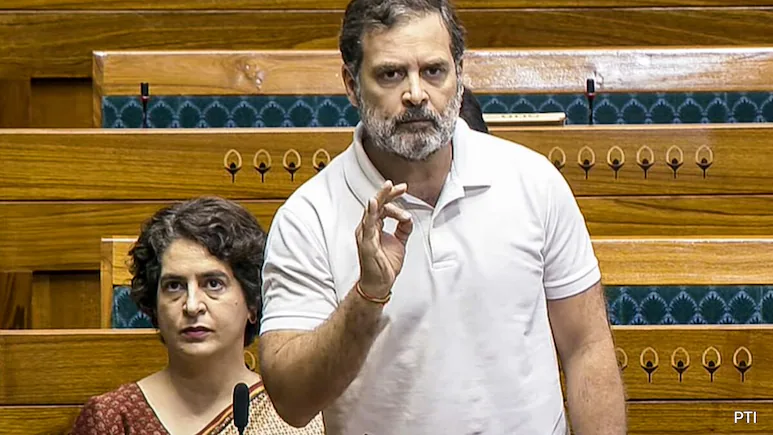
Leader of the Opposition Rahul Gandhi has snubbed the Viksit Bharat Guarantee for Employment and Livelihood Mission (Rural) Bill, dubbed the G RAM G bill, as anti-state and anti-village after it cleared the parliament amid bitter protests by the opposition. The G Ram G Bill is meant to be an updated version of the UPA governments flagship MGNREGA (Mahatma Gandhi National Rural Employment Act) that will likely replace it once the President gives her assent.
Gandhi slammed the parliament approval despite the opposition demanding the Bills scrutiny by a standing committee.
This law was bulldozed through Parliament without proper scrutiny. The opposition demand to send the bill to a Standing Committee was rejected. A law that rewires the rural social contract, affecting crores of workers, should never be rammed through without serious committee scrutiny, expert consultation, and public hearings, the Congress leader thundered.
Directing his criticism at the Modi government, he underlined that the proposed law demolishes the rights-based and demand-driven guarantee and turns it into a rationed scheme controlled from Delhi.
Read: G Ram G Bill, To Replace MGNREGA, Clears Parliament, Opposition Stages Overnight Protest
Last night, the Modi government demolished twenty years of MGNREGA in one day. VB-G RAM G isnt a revamp of MGNREGA. It demolishes the rights-based, demand-driven guarantee and turns it into a rationed scheme which is controlled from Delhi. It is anti-state and anti-village by design, the Congress MP fumed.
Prime Minister Narendra Modis targets are clear: weaken labour, weaken the leverage of rural India, especially Dalits, OBCs and Adivasis, centralise power, and then sell slogans as reform, he added, intensifying his opposition to the new bill.
Gandhi said the MGNREGA gave the rural worker bargaining power, whereas the G RAM G Bill weakens the scheme for the rural poor.
With real options (under MGNREGA), exploitation and distress migration fell, wages increased, working conditions improved, all while building and reviving rural infrastructure. That leverage is precisely what this government wants to break. By capping work and building in more ways to deny it, VB-G RAM G weakens the one instrument which the rural poor had, he alleged as he praised the UPA-era MGNREGA law.
The Congress MP also recalled how the MGNREGA prevented crores of people from slipping into hunger and debt during Covid, arguing that rationing a jobs programme first impacts the women, Dalits, Adivasis, landless workers, and the poorest OBC communities.
Read: Renaming MGNREGA Takes Out Heart Of Entire Scheme: Shashi Tharoor
Vowing to stop the government, he said, MGNREGA is among the most successful poverty alleviation and empowerment programmes in the world. We will not let this government destroy the rural poors last line of defence. We will stand with workers, panchayats, and states to defeat this move and build a nationwide front to ensure this law is withdrawn.
Under MGNREGA, the government guaranteed 100 days of work in rural areas and paid unemployment allowance in case of no work. The G RAM G Bill would raise the 100-day guarantee to 125, keeping the other two rules untouched. But what has drawn criticism is that under G RAM G, employment is meant to be generated through a pre-approved plan.
The Congress had been outraged over the switch in name from Mahatma Gandhi to G Ram G, with several leaders declaring that it was the governments intention to obliterate the name of the Father of the Nation from history.
The opposition MPs even sat on a dharna in the parliament complex, questioning some provisions of the Bill that allegedly wiped clean the soul and spirit of the flagship social welfare programme introduced by the UPA government in 2005.
The Bill cleared the parliament after a midnight voting in the Rajya Sabha. It had earlier cleared the Lok Sabha amid protests and walkouts in the afternoon. The debate in Rajya Sabha went on post-midnight. The voting was held around 12.15 am, and the bill was passed by voice vote. It will become a law once approved by the President.
For clarifications/queries, please contact Public Talk of India at:
+91-98119 03979 publictalkofindia@gmail.com
For clarifications/queries,
please contact Public Talk of India at: