.png)


Last Updated on January 02, 2026
Last Updated on January 02, 2026





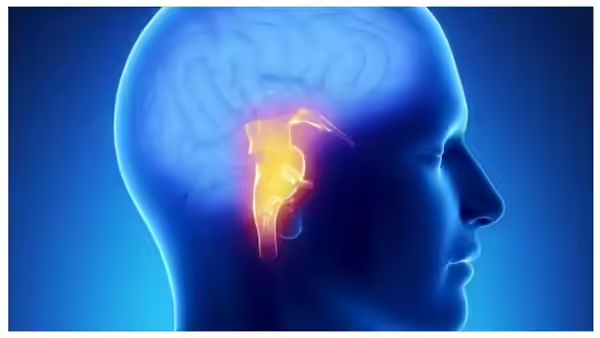
We all think of dancing as either a hobby, or something you do to express yourself, however dancing to your favorite song does more than improve your mood. Leading research now emerges which says that dancing is extremely powerful for your brain as well...
Dancing serves as an effective daily instrument, enhancing brain health through its ability to unite physical activity with musical elements, memory functions, emotional responses and social interactions. The program requires your brain to learn new skills while it coordinates and adapts during each session, resulting in better neuroplasticity, stronger cognitive abilities and potential dementia protection during older age.
Dr. Bing, MD MPH, says, Dance is not just movement. It combines coordination, memory, rhythm, learning, and social connection all at once. As a neurologist, I see how this kind of cognitive load strengthens neuroplasticity, builds cognitive reserve, and supports long term brain health. Other forms of exercise are excellent, but dance challenges the brain in ways most workouts do not. Lets see how...
The entire brain needs to operate at its peak performance to execute dance movements...
The practice of dance requires more than foot movement, because it demands your brain to perform multiple tasks, including rhythm tracking, step memory, posture adjustment and simultaneous responses to partners or groups. The brain receives multiple stimuli when performing this multi-tasking movement pattern because it activates motor functions, sensory perception, visual processing, emotional centers and planning systems. The brain maintains its flexibility and strength through this type of complex brain stimulation.
The combination of music, timing and coordination in dance creates an activity that provides both aerobic exercise benefits and brain game challenges. This combination seems to drive stronger neuroplastic changes than many simple, repetitive workouts, such as walking at the same pace on a treadmill.
How dance boosts neuroplasticity
The brain boosts neuroplasticity through dancing because it builds new pathways while changing its structure during learning processes, practice sessions and recovery from injuries. Research studies on dance training, which underwent systematic review show that weekly dance practice leads to brain area expansion, resulting in better memory functions, movement control, attention abilities and brain growth factor production.
Research shows that older adults who dance for months, develop new brain connections, which enhance their ability to focus, control their body movements and think at higher levels. Standard fitness programs which match time and intensity levels, do not produce these changes to the same extent as dancing does, because dancing creates a distinctive brain load.
Dance activities help people develop cognitive reserve which acts as a protective mechanism for their memory functions
Cognitive reserve functions as the brains emergency storage system, enabling people to maintain their mental clarity during brain aging processes and neurological diseases. A key research project discovered that older people who danced socially at least seven days per week developed a lower dementia risk than those who engaged in alternative physical activities. The activity serves as dementia protection, because it enables people to maintain their active cognitive abilities and motor skills.
Research studies that use meta-analyses show dance programs help people with mild cognitive impairment, develop their global thinking abilities, memory, visuospatial skills and language skills, which protect against dementia development. The research shows that dance activities serve two purposes: entertaining people while helping them fight mental decline which supports their ability to perform daily mental tasks as they age.
Better mood, stress relief, and social connection
The process of dancing to music creates a neurochemical symphony, which releases dopamine, endorphins and oxytocin to produce better mood, pain reduction and stronger social connections with others. Research studies with elderly participants have proven that dance therapy programs help patients with depression and anxiety symptoms, through group-based social dance activities.
Social engagement, physical activity, and positive mood are all known modifiable risk factors for dementia, and dance targets all three at once. The brain receives better protection through dance classes and social dance groups than it does from physical exercise, that does not include social interaction and emotional involvement.
Physical exercise routines do not require the same mental dedication
In dance, users need to repeat rhythmic movements by walking and cycling at a steady pace, while following a set pattern which traditional exercise programs require. The process of dancing demands students to memorize new dance patterns, while they need to adapt their movements to musical changes, handle their partner and avoid collisions with other dancers in the area, which creates high mental processing demands.
Research studies that evaluate dance-based interventions against other exercise methods show that organized dance activities deliver equal or superior results for enhancing cognitive functions, emotional health and social abilities. The brain develops new connections based on what it learns, so dance activities which combine learning with memory development, balance maintenance and social skills practice create a strong brain health promotion effect.
For clarifications/queries, please contact Public Talk of India at:
+91-98119 03979 publictalkofindia@gmail.com
For clarifications/queries,
please contact Public Talk of India at: